
Uncategorized
Unlabeled K2 Products: A Practical Guide to Unknown Synthetic Cannabinoid Risk
Nov
Unlabeled K2 product safety is a serious concern because names, artwork, and marketing language cannot confirm what a synthetic cannabinoid product contains. Products sold as K2, Spice, herbal incense, synthetic cannabis, research chemicals, or infused paper may contain different compounds from one batch to the next. Some may contain multiple active substances, contaminants, or far more potent material than expected.
This evergreen guide is not a product recommendation or a preparation guide. It explains why unknown K2 sheets, liquids, powders, sprays, and herbal blends are risky, how to avoid accidental exposure, and what to do when someone develops concerning symptoms.
Why an unlabeled K2 product is especially unpredictable
Synthetic cannabinoids are laboratory-made chemicals that can affect the same broad brain receptors involved in cannabis effects, but their activity can be much stronger, less predictable, or qualitatively different. “K2” and “Spice” are informal names rather than reliable chemical identities. Two products with similar packaging may contain entirely different compounds.
Risk increases when a product has no complete ingredient list, no trustworthy batch information, no independent testing, or no clear legal manufacturer. A label that says “not for human consumption” does not make the contents safer. It may simply indicate that the product is being marketed in a way intended to avoid scrutiny.
For an overview of the types of product categories that may appear on a retail website, the K2 Sheets Shop home page should be treated only as a directory of site content—not as evidence that any product is safe, tested, or suitable for consumption.
Common forms and why each creates hazards
K2 soaked or infused paper
Paper can look ordinary while carrying an unknown amount of active chemical. Distribution may be uneven, meaning one section can contain much more material than another. Handling, tearing, folding, storing, or transferring the paper can also move residue to hands, clothing, phones, or other surfaces.
Paper products may be particularly dangerous around children, pets, older adults, or anyone who could mistake them for ordinary paper. A small piece should not be assumed to represent a predictable amount.
K2 liquid and spray products
Liquids and sprays create additional uncertainty because concentration may vary, the contents may separate during storage, and droplets can spread beyond the intended surface. Aerosolized or sprayed material may be inhaled unintentionally or contact the eyes and skin.
Never transfer an unknown liquid into a food, drink, cosmetic, medicine, or household-cleaner container. That can create a dangerous mix-up and expose another person who does not know what the container holds.
K2 powder and concentrate
Powders and concentrates can be difficult to identify by appearance. A fine powder may become airborne during movement or cleanup, and a concentrate can contain a much higher amount of active chemical than a plant material would. There is no reliable way to estimate safety from color, texture, smell, or a seller’s description.
Herbal incense and botanical blends
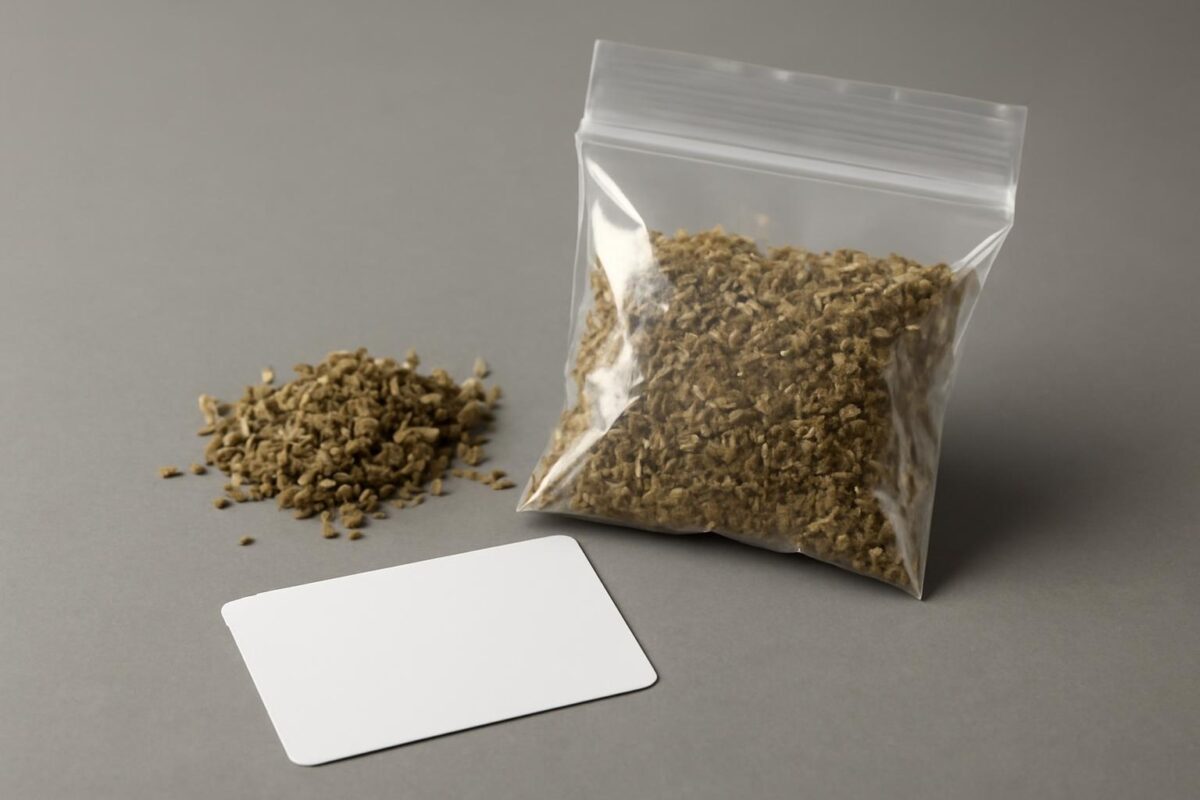
The words “herbal,” “botanical,” “premium,” “strong,” or “extra potent” describe marketing, not a verified safety profile. Plant material may be coated or mixed with synthetic chemicals, and the underlying herbs do not reveal the identity or amount of the active substance.
Browsing related site sections, including the available product sitemap, cannot establish the contents or safety of any listing. Product pages and labels should never replace laboratory analysis or professional medical advice.
Warning signs that a product should be treated as unknown
Assume a product is high risk when several of the following apply:
- There is no full ingredient list or the ingredients use vague terms such as “legal high” or “research blend.”
- The package lacks a manufacturer name, physical address, lot number, or dated batch information.
- Claims focus on being unusually strong, extra potent, or capable of producing intense effects.
- The product is sold in ordinary paper, an unmarked bag, a reused bottle, or a container without child-resistant protection.
- The seller refuses to explain testing methods or provides only an image of a generic certificate.
- The appearance, smell, or texture differs from a previous package with the same name.
- The product is offered with instructions to hide it, disguise it, or misrepresent it to others.
None of these signs proves what a substance contains. They simply mean that relying on the packaging would be unsafe.
How to reduce accidental exposure
Do not taste, burn, vape, or mix an unknown product
There is no dependable home method for determining whether K2 paper, liquid, powder, or spray is safe. Burning or vaporizing can create additional chemicals and may expose other people in the room. Mixing an unknown substance with alcohol, cannabis, prescription medicines, stimulants, or sedatives can produce especially unpredictable effects.
Limit contact and protect other people
If you find an unknown product, avoid touching your face, eyes, food, or drink. Keep it away from children and animals. Do not place it in a pocket, handbag, kitchen drawer, or medication area where residue could spread or the item could be mistaken for something else.
If contact occurs, remove contaminated clothing and wash exposed skin with soap and water. If material reaches the eyes, rinse gently with clean water for several minutes. Do not use solvents, bleach, or other harsh chemicals on skin.
Preserve useful information without handling unnecessarily
If someone has been exposed, keep the packaging or a photograph available for emergency professionals if it can be done safely. Record the time of exposure, the suspected route of exposure, and any other substances involved. Do not delay medical care while trying to identify a logo, search a product name, or contact a seller.
For general site navigation and policy information, the site page sitemap may help locate relevant pages, but online descriptions cannot determine the chemical identity of an unknown product.
Recognizing a possible synthetic cannabinoid emergency
Effects can begin quickly or be delayed. A person may appear calm at first and then deteriorate. Seek urgent medical help for symptoms such as:
- Seizures, collapse, loss of consciousness, or inability to wake the person
- Difficulty breathing, slow breathing, choking, or blue or gray lips
- Severe agitation, confusion, hallucinations, panic, or dangerous behavior
- Chest pain, a very fast or irregular heartbeat, or extreme sweating
- Repeated vomiting, severe weakness, overheating, or inability to stand
- Sudden muscle rigidity, uncontrolled movements, or signs of stroke
What to do during an emergency
- Call emergency services immediately if the person is unconscious, having a seizure, struggling to breathe, severely confused, or otherwise in danger. Give the exact location and explain that a synthetic cannabinoid or unknown chemical may be involved.
- Check breathing and responsiveness. Follow the dispatcher’s instructions. If the person is not breathing normally and you are trained, begin appropriate resuscitation.
- Place an unconscious but breathing person on their side if there is no suspected injury preventing it. This can help keep the airway clear.
- Do not induce vomiting and do not give food, drinks, coffee, cannabis, alcohol, or medicines unless instructed by a medical professional.
- Reduce stimulation. Move bystanders away, lower noise and bright lights, and speak calmly. Do not physically restrain an agitated person unless necessary to prevent immediate harm.
- Keep the packaging available for responders when safe. Tell them what was reportedly used, when it was used, and whether other substances or medications may be involved.
In the United States, Poison Control can be reached at 1-800-222-1222. Outside the United States, contact your local poison information service or emergency number. If the person is seriously ill, call emergency services first.
Why “legal,” “lab-made,” and “tested” claims can mislead
Legal status varies by location and can change as governments respond to specific compounds. A product being sold openly does not prove that it is legal everywhere or safe to use. Similarly, “lab-made” describes origin, not quality. Many dangerous substances are manufactured in laboratories.
Testing claims also require careful interpretation. A test may cover only a limited list of compounds, a single sample, or a specific batch. It may not measure contamination, uneven distribution, degradation, or the actual amount on every piece of paper or in every bottle. A logo or downloadable certificate is not the same as transparent, independent, batch-specific verification.
Safer questions to ask before any exposure
Instead of asking whether a product looks authentic or whether another person tolerated it, ask:
- Is the complete chemical identity independently verified?
- Is there reliable, batch-specific testing from a qualified laboratory?
- Could another person or animal accidentally contact it?
- Are prescription medicines, alcohol, or other drugs involved?
- Is there a clear plan for emergency help if symptoms develop?
If the answers are unclear, the safest choice is not to use the product and to prevent others from being exposed.
Frequently asked questions
Can you identify K2 by its smell or appearance?
No. Color, smell, texture, packaging, and branding cannot reliably identify a synthetic cannabinoid or determine its strength.
Is K2 paper safer than K2 liquid or powder?
There is no dependable safety ranking based on form. Paper, liquid, powder, spray, and herbal material can all contain unknown chemicals and uneven concentrations. Each form also creates different accidental-exposure hazards.
Does “not for human consumption” make a product safe?
No. That wording is a warning that the product has not been presented as a safe consumer product. It does not confirm the contents or reduce toxicity.
What if someone feels fine after using an unknown product?
Continue monitoring them and avoid additional substances. Delayed symptoms can occur, and a person may not recognize deteriorating judgment or confusion. Seek urgent help if any serious warning sign appears.
Should an unknown K2 product be thrown in the trash?
Do not handle, open, burn, pour out, or flush it casually. Keep people and pets away and contact local hazardous-waste or public-health authorities for disposal guidance. If there has been exposure, contact Poison Control or emergency services.
Key takeaway
The central issue with K2 and Spice is not whether a package looks genuine. It is whether the contents, concentration, contamination risk, and legal status are actually known. With unlabeled or poorly documented synthetic cannabinoid products, those answers are often unavailable. Avoiding exposure, protecting others, and seeking prompt medical help when symptoms appear are more reliable safety measures than trusting a product name, strength claim, or attractive label.
