
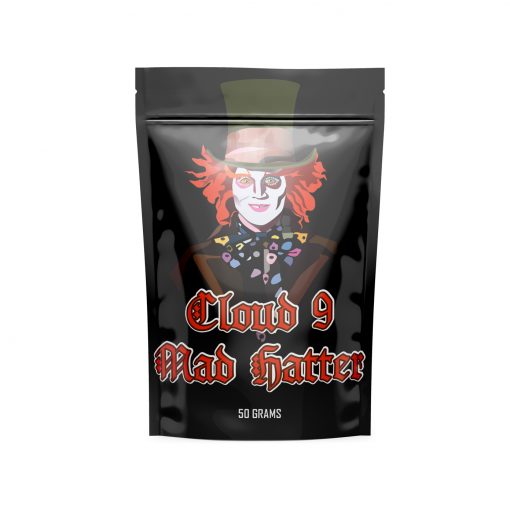
Mad Hatter Cloud 9 50-GRAM Bag
$219.99
Understanding Mad Hatter Cloud 9 50-GRAM Bag: Origins, Effects, and Safety Facts
Products marketed under names like the Mad Hatter Cloud 9 50-GRAM Bag emerged in the late 2000s and early 2010s during the rise of synthetic cannabinoid blends. Manufacturers originally produced these compounds by spraying laboratory-synthesized chemicals onto dried plant matter, selling them under labels like “herbal incense” or “K2 spice.”
Initially, these synthetic products gained public attention because manufacturers exploited legal loopholes and marketed them as legal alternatives to natural cannabis. Many early consumers sought them out under the assumption that standard drug screenings would not detect these novel compounds. However, as public health agencies began analyzing these mixtures, significant safety hazards and severe health risks quickly came to light.
Key Usage Context and Historical Marketing of Mad Hatter Cloud 9 50-GRAM Bag
Producers historically distributed products like Mad Hatter Cloud 9 under specific retail strategies:
-
Deceptive Labeling: Brands routinely labeled packages as “herbal incense” or “not for human consumption” to bypass consumer protection standards and retail laws.
-
Method of Use: Individuals typically smoked or vaporized the dried plant material to achieve psychoactive mind-altering effects.
-
Evading Testing: Consumers frequently sought synthetic blends because early workplace and legal drug panels lacked the chemical markers to detect new synthetic compounds.
Psychoactive Effects and Health Risks of Mad Hatter Cloud 9 50-GRAM Bag
Synthetic cannabinoids do not interact with the human body in the same way as natural plant cannabinoids. While natural THC acts as a partial agonist at brain cannabinoid receptors, synthetic chemicals often act as full agonists, creating dangerously potent and unpredictable reactions.
-
Severe Physical Reactions: Users frequently experience elevated heart rate (tachycardia), high blood pressure, extreme nausea, and severe tremors.
-
Neurological and Psychological Distress: The high potency of these compounds can trigger acute psychosis, extreme paranoia, panic attacks, hallucinations, and violent outbursts.
-
Life-Threatening Hazards: Unregulated manufacturing leads to inconsistent chemical dosing across batches. This instability has caused emergency room hospitalizations, kidney damage, seizures, and fatal overdoses.
Unpredictability vs. Claimed Consumer Benefits: Mad Hatter Cloud 9 50-GRAM Bag
While early consumers sought out products like Mad Hatter Cloud 9 for temporary euphoria, relaxation, or heightened sensory perception, public health authorities stress that synthetic cannabinoids carry extreme variability. Because underground laboratories produce these blends without quality controls or standardized formulas, one package can contain drastically different chemical concentrations than another. Consequently, any brief sense of relaxation carries a high risk of immediate medical complications.
Current Legal Status and Enforcement
The legal landscape surrounding products like Mad Hatter K2 has changed dramatically over the past decade:
-
United States Regulations: The Federal Synthetic Drug Abuse Prevention Act and the United States Drug Enforcement Administration (DEA Drug Fact Sheets) placed core synthetic cannabinoid families into Schedule I controlled substance status. Manufacturing, selling, or possessing these chemicals is illegal under federal law.
-
Global Bans: Countries across Europe, as well as the United Kingdom and Australia, enforce strict statutory bans prohibiting synthetic cannabinoid production and distribution.
-
Ongoing Enforcement Challenges: Although manufacturers frequently alter chemical structures to skirt existing laws, global legislation now covers broad chemical classes to close regulatory loopholes and protect public safety.
what are chemical component in this product?
Active Synthetic Cannabinoid Chemicals (Research Chemicals)
The psychoactive components in Mad Hatter products are synthetic cannabinoids—laboratory-synthesized research chemicals designed to bind to the brain’s CB1 and CB2 cannabinoid receptors. Because clandestine manufacturers continuously alter their formulas to skirt drug bans, the specific chemical compounds found in testing vary by batch:
-
Indazole-Carboxamide Analogs:
-
5F-AKB48 (5F-APINACA): A potent fluorinated synthetic cannabinoid that acts as a full agonist at cannabinoid receptors.
-
AKB48-N-(4-pentenyl) analog: A structurally modified variant of AKB48 used to bypass early precursor bans.
-
-
Cyclopropylindole Analogs:
-
UR-144: A tetramethylcyclopropyl indole compound with high affinity for CB2 receptors.
-
XLR-11 (5F-UR-144): A fluorinated derivative of UR-144 known for elevated potency and links to acute kidney toxicity.
-
-
Early-Generation Aminoalkylindoles (in earlier formulations):
-
AM-2201: A highly potent naphthoylindole derivative known for causing acute anxiety, rapid heart rate, and psychotic symptoms.
-
JWH-018 & JWH-022: Early synthetic cannabinoids that bind much more strongly to CB1 receptors than natural plant THC.
-
Physical Substrate (Carrier Material)
The synthetic chemicals listed above are dissolved in industrial organic solvents (such as acetone) and sprayed onto inert, dried plant matter to mimic the appearance of herbal tea or smoking blends:
-
Inert Plant Leaves: Commonly includes crushed Damiana (Turnera diffusa), Marshmallow leaf (Althaea officinalis), Mullein (Verbascum thapsus), or Lotus leaves.
-
Aromatics & Flavoring Additives: Artificial scenting oils or terpenes added to give the mixture a fruity, sweet, or incense-like fragrance.
Key Risk: Inconsistent Dosing
Because these chemicals are mixed in unregulated underground facilities without quality controls, different bags—or even different sections within a single 50-gram bag—can have drastically different concentrations. This uneven distribution (“hot spots”) is a primary cause of accidental overdoses, severe panic attacks, cardiovascular emergencies, and acute kidney injury associated with synthetic cannabinoids.
Frequently Asked Questions
What exactly is in a product like Mad Hatter Cloud 9?
Mad Hatter Cloud 9 consists of inert, dried plant material that has been sprayed with laboratory-created synthetic chemicals. These chemical compounds artificially target the brain’s cannabinoid receptors, but they do not contain organic cannabis or natural plant extracts.
Are synthetic cannabinoid products safer than natural cannabis?
No. Synthetic cannabinoids carry significantly higher health risks than natural cannabis. Because they bind much more strongly to brain receptors and lack natural balancing cannabinoids like CBD, they frequently cause severe cardiovascular and psychiatric emergencies.
Why were products labeled as “herbal incense” if people smoked them?
Manufacturers used the “herbal incense” label solely as a regulatory dodge to avoid oversight by health agencies like the FDA. By adding “not for human consumption” disclaimers, sellers attempted to evade liability while distributing psychoactive substances.
Can modern drug tests detect synthetic cannabinoids?
Yes. While early workplace drug tests missed these chemicals, modern toxicology panels routinely screen for common synthetic cannabinoid metabolites. Medical facilities and law enforcement agencies regularly utilize specialized testing to identify these substances.
Where can I find information on synthetic drug risks and addiction help?
For comprehensive research on synthetic chemicals and health warnings, review educational resources from the [NIDA on synthetic cannabinoids]. If you or a loved one need confidential guidance or addiction support, contact the national helpline at [SAMHSA].
Explore Safe, Natural Botanical Solutions
Understanding the history and risks of synthetic chemical blends highlights the importance of choosing transparent, natural, and fully compliant products.
Learn more about safe botanical alternatives by exploring our main catalog on the K2 Sheet Shop homepage, or browse our dedicated [herbal incense collection] for natural, non-synthetic room-scenting options.
Be the first to review “Mad Hatter Cloud 9 50-GRAM Bag”
You must be logged in to post a review.
Related products

Reviews
There are no reviews yet.