
Uncategorized
Owensboro Synthetic Marijuana Operation Reports: What They Reveal About K2 Risk and Community Safety
Nov
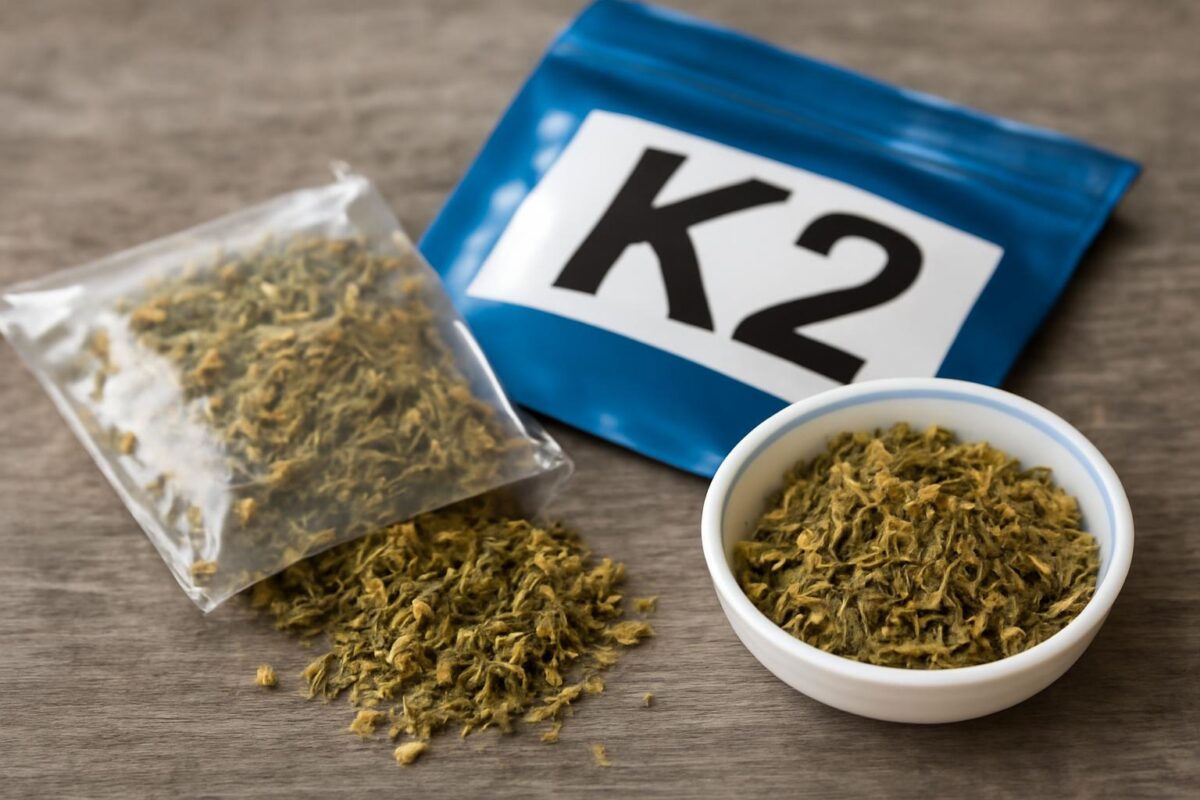
Recent reports from Owensboro, Kentucky, describe arrests connected to an alleged synthetic marijuana operation. Coverage from local news outlets has renewed attention on a familiar but often misunderstood problem: products sold or described as K2, Spice, synthetic marijuana, herbal incense, or synthetic cannabinoids may contain laboratory-made chemicals that are difficult to identify, measure, or predict.
The Owensboro reporting is not simply a story about one investigation. It is also a reminder that the word “marijuana” can create a false sense of familiarity. Synthetic cannabinoids are not a consistent form of cannabis, and a product’s package, color, scent, or advertised name cannot establish what is actually present. Different batches may contain different compounds, while the same product name may be used for entirely different formulations.
This article explains what the reported operation can teach consumers, families, retailers, and community organizations about K2 risk. It does not provide instructions for making, spraying, soaking, mixing, disguising, or using synthetic cannabinoid products. Anyone who encounters an unknown substance should avoid handling it and seek appropriate medical or emergency guidance.
What the Owensboro reports put in focus
The recent coverage describes law-enforcement searches and arrests related to an alleged synthetic marijuana operation in Daviess County. Because an arrest or charge is not a conviction, the facts of the case should be understood as allegations until resolved in court. Still, the reports highlight several broader issues that matter beyond the immediate investigation.
First, “synthetic marijuana” is a broad street and media term rather than a reliable description of a specific chemical. Products sold under names such as K2 or Spice can involve many different synthetic cannabinoid compounds. Some act strongly at cannabinoid receptors, while others may produce additional effects that are not expected from ordinary cannabis.
Second, production and distribution may occur outside regulated pharmaceutical or consumer-product systems. That can mean no dependable quality control, no verified concentration, no reliable contaminant screening, and no trustworthy connection between a label and the substance inside. Even when a seller claims a product is “premium,” “extra strength,” “lab created,” or “consistent,” those claims do not prove safety.
Third, investigations often reveal how easily these products can move through ordinary-looking formats. Synthetic cannabinoids may be associated with plant material, liquids, powders, or paper products. The format can change the practical risk, but none of these forms makes an unknown chemical safe.
Why K2 contents are difficult to predict
Natural cannabis products are not risk-free, but commercial cannabis markets in some jurisdictions may include testing requirements, labeled cannabinoid content, and manufacturing controls. Illicit or unregulated synthetic cannabinoid products generally cannot be evaluated in the same way.
A package labeled K2, Spice, herbal incense, or synthetic cannabis may not disclose the active compound at all. It may also omit important information about concentration, solvents, contaminants, or chemical by-products. A product that appears identical to another package may have been prepared using a different compound or a different amount of active material.
Several factors can make exposure especially unpredictable:
- Changing chemical formulas: Manufacturers may substitute one synthetic cannabinoid for another as laws change or supplies become available.
- Uneven distribution: Active chemicals may not be spread uniformly through plant material, paper, or another carrier.
- Unknown concentration: A product described as strong or potent does not provide a medically meaningful measurement.
- Contamination: Production environments may introduce solvents, residues, microbes, or other substances.
- Misleading names: Brand names and strain-style descriptions can imply consistency that has not been demonstrated.
These problems also explain why two people can report very different effects from products sold under the same name. Variation does not mean that one version is safe. It means the contents and exposure are not reliably known.
Paper, liquid, powder, and incense formats do not remove the risk
K2 is sometimes discussed in relation to infused paper, soaked sheets, sprayed plant material, liquid incense, or powder blends. These descriptions refer to formats or preparation claims, not dependable safety categories.
Paper can create particular concerns because it is easy to store, conceal, transport, or mistake for an ordinary material. However, visual appearance cannot show whether paper contains a synthetic cannabinoid, how much may be present, or whether the substance has transferred to hands or nearby surfaces. People should not touch suspicious paper or attempt to test it informally.
Liquids and sprays create additional uncertainty because a small amount may be distributed unevenly or transferred to skin, clothing, furniture, or other objects. A liquid’s color, smell, or thickness cannot establish its identity. Trying to dilute, combine, spray, or repackage an unknown liquid can increase the chance of accidental exposure.
Powders can be especially hazardous because they may become airborne, spread through contact, or be mistaken for another material. Anyone who discovers an unknown powder should avoid sweeping, vacuuming, shaking, or otherwise disturbing it. Keep people and pets away from the area and contact local emergency or hazardous-material authorities for guidance.
The product categories and terminology used online can change quickly. For general site navigation, readers may encounter references to K2 sheets and herbal-incense products, but product descriptions should never be treated as proof of chemical identity, potency, legality, or safety.
Health effects can be rapid and severe
Synthetic cannabinoid exposure may affect the brain, heart, nervous system, and behavior. Reported symptoms can include severe anxiety, agitation, confusion, hallucinations, vomiting, loss of coordination, chest pain, rapid heartbeat, seizures, unconsciousness, and difficulty breathing. The risk can be higher when the substance is combined with alcohol, prescription medicines, stimulants, opioids, or other drugs.
There is no dependable way to predict symptoms from a product name or from another person’s previous experience. A person who appeared well after an earlier exposure may become seriously ill during a later exposure to a different batch or compound.
Emergency symptoms should be treated as urgent. Call emergency services if someone has trouble breathing, collapses, has a seizure, cannot be awakened, develops chest pain, becomes dangerously agitated, or appears severely confused. Do not leave the person alone. If it is safe to do so, provide responders with the package or a photograph of the label, but do not handle a suspicious substance unnecessarily.
What families and communities can learn from the case
News about an alleged Owensboro synthetic marijuana operation can prompt useful conversations without relying on fear or stigma. Families can focus on practical safety questions:
- Could a child, teenager, older adult, or pet come across an unknown paper, powder, plant material, or liquid?
- Does everyone in the household know not to taste, smell closely, burn, or touch an unidentified product?
- Are emergency contacts and poison-information resources easy to find?
- Would household members know which symptoms require an immediate emergency call?
- Can concerns be discussed without assuming that a person who was exposed intended to take a drug?
Accidental exposure is possible in homes, vehicles, workplaces, shared buildings, and public spaces. Children and pets may be at particular risk because they may touch or ingest materials without understanding the danger. Schools, shelters, housing providers, and community groups can reinforce simple messages: do not handle unknown substances, isolate the area when possible, and seek professional advice.
Why labels and marketing language are not safety evidence
Words such as “legal high,” “natural,” “botanical,” “research chemical,” “premium,” “extra potent,” or “lab tested” can sound reassuring while providing little useful information. A laboratory reference may relate to the identity or purity of a limited sample, not the uniformity of every package. Similarly, a claim that a product is intended only as incense does not eliminate the possibility of harmful chemical exposure.
Consumers should be cautious with websites or listings that emphasize strength, fast effects, secrecy, or guaranteed experiences. They should also be wary of claims that a product is safer because it is sold as paper, powder, liquid, or herbal material. Format is not a substitute for verified composition and regulated manufacturing.
For readers reviewing online product terminology, a site’s broader product index may show how many names and formats are used in this marketplace. That variety reinforces an important point: a commercial listing is not an independent toxicology report.
Legal status can change, but chemical risk remains
Synthetic cannabinoid laws vary by jurisdiction and may address named compounds, chemical families, analogues, or products intended for human consumption. A product may be illegal in one location, restricted in another, or mislabeled in a way that makes its status difficult to determine. Shipping, possession, distribution, and manufacturing can carry separate legal consequences.
Legal wording should not be confused with health guidance. A product being advertised online, described as incense, or temporarily absent from a list of controlled substances does not mean it is safe to consume or handle. Conversely, a person exposed to an unknown substance should seek medical help rather than delay care because of fear about legal consequences.
Because rules and product names change, people seeking current regulatory information should consult official local or national agencies. The category structure visible in a product-category index is not a substitute for legal advice or a public-health assessment.
A practical response plan for suspected exposure
If someone may have encountered K2 or another unknown synthetic cannabinoid, prioritize immediate safety:
- Move away from the substance if doing so does not create additional danger.
- Do not taste, burn, smell closely, mix, or test it at home.
- Call emergency services for breathing problems, seizures, unconsciousness, chest pain, collapse, or severe agitation.
- Contact a poison-information service for guidance when exposure is suspected but symptoms are mild or uncertain.
- Keep packaging available for responders only if it can be done without touching the substance.
- Do not induce vomiting unless specifically instructed by a qualified medical professional.
Responders may need to know when the exposure occurred, how it happened, what symptoms appeared, and whether alcohol or other drugs may also be involved. Honest information can help clinicians choose appropriate monitoring and treatment.
Frequently asked questions
What does “synthetic marijuana” mean?
It is a broad term commonly used for laboratory-made chemicals that interact with cannabinoid receptors. It does not mean the product is equivalent to cannabis, and it does not identify a specific compound or concentration.
Can a label confirm that K2 is safe?
No. Labels, brand names, scent, appearance, and marketing claims cannot reliably establish what an unregulated product contains or how much active chemical is present.
Is K2 on paper safer than K2 in liquid or plant material?
No format can be assumed safe. Paper, liquid, powder, and plant material may all involve unknown compounds, uneven distribution, contamination, or accidental transfer.
Should an unknown K2 product be thrown away?
Do not handle, open, burn, flush, sweep, or vacuum an unknown substance. Keep people and animals away and contact local emergency, poison-information, or hazardous-material authorities for disposal guidance.
What is the most important lesson from the Owensboro reports?
The central lesson is that synthetic cannabinoid products can sit outside reliable quality controls while being presented in familiar or attractive forms. Treat unknown K2 or Spice products as potential chemical hazards, not as ordinary cannabis or harmless incense.
The reported Owensboro investigation will proceed through the legal system, and the allegations should be evaluated through the courts. From a public-health perspective, however, the warning is immediate: product names and packaging cannot replace verified composition, and rapid medical help is more important than speculation when exposure symptoms appear.
