
3BR-PVP Crystals
Price range: $195.00 through $9,000.00
3Br-PVP Crystals: Technical Overview & Pharmacological Profile
Buy 3br-pvp crystals online! The 3Br-PVP (3-Bromopyrovalerone) is a synthetic compound belonging to the substituted cathinone and pyrovalerone chemical classes. It is structurally related to central nervous system stimulants such as α-PVP (alpha-pyrrolidinopentiophenone), pyrovalerone, and MDPV.
In research and forensic contexts, 3Br-PVP is studied to understand the structure-activity relationships (SAR) of halogenated cathinone derivatives on monoamine transporters.
what is 3Br-PVP Crystals
3Br-PVP Crystals (3-bromo-α-pyrrolidinovalerophenone or 3-bromopyrovalerone hydrochloride) are the crystalline salt form of a synthetic stimulant belonging to the substituted cathinone and pyrrolidinophenone chemical families.
It is a novel psychoactive substance (NPS) and halogenated structural analog of α-PVP (“Flakka”) and MDPV.
Structural Breakdown & Differences between Substituted cathinones and α-pyrrolidinophenones
While all α-pyrrolidinophenones (often abbreviated as pyrovalerones or “pvps”) belong to the broader family of substituted cathinones, they form a distinct sub-subclass with significant structural, physical, and pharmacological differences. you can follow this link to browse through our synthetic cannabinoids products
Below is a detailed structural and functional breakdown comparing standard substituted cathinones with α-pyrrolidinophenones.
The Core Backbone Comparison
Both chemical families are derived from cathinone (beta keto-amphetamine), which is the primary active alkaloid naturally found in the Khat plant (Catha edulis).
Standard Substituted Cathinones
-
Core Structure: A phenethylamine skeleton with a ketone group ($\text{C=O}$) at the $\beta$-position relative to the nitrogen atom.
-
Nitrogen Group ($R_1$): Typically features an open-chain amine substituent. This can be a primary, secondary, or tertiary amine (e.g., a methyl group as in mephedrone, or an ethyl group as in ethcathinone).
-
Examples: Mephedrone (4-MMC), Methedrone, Methylone, Bupropion.
α-Pyrrolidinophenones (Pyrovalerones)
-
Core Structure: Shares the same beta-keto-amphetamine core, but with a specific, rigid amine modification.
-
Nitrogen Group: The nitrogen atom is incorporated directly into a 5-membered saturated heterocyclic ring called a pyrrolidine ring.
-
Alkyl Side Chain (R_2): Usually possesses an extended aliphatic tail attached to the $\alpha$-carbon (typically 3 to 5 carbons long, such as a propyl or butyl chain).
-
Examples: alpha-PVP (“Flakka”), MDPV, alpha-PHP, Pyrovalerone, 3Br-PVP.
Detailed Structural Differences
| Structural Feature | Standard Substituted Cathinones | α-Pyrrolidinophenones |
| Amine Modification | Open-chain primary or secondary amine (e.g. NH-CH_3) | Cyclic tertiary amine (Pyrrolidine Ring) |
| Nitrogen Rigidity | High conformational flexibility around the nitrogen atom | Restricted, rigid molecular geometry around nitrogen |
| $\alpha$-Carbon Chain Length | Short alkyl chain (usually a simple methyl group, CH_3) | Extended alkyl chain (e.g., propyl, butyl, or pentyl chain) |
| Steric Bulk around Nitrogen | Lower steric hindrance | Higher steric hindrance due to the ring structure |
| Lipophilicity ($\log P$) | Moderate lipophilicity | High lipophilicity (passes the Blood-Brain Barrier rapidly) |
Chemical Structure & Identification
3Br-PVP differs structurally from parent pyrovalerones by the substitution of a bromine atom on the aromatic benzene ring.
-
Chemical Class: Substituted Cathinone / Pyrovalerone Derivative
-
IUPAC Name: 1-(3-bromophenyl)-2-(pyrrolidin-1-yl)pentan-1-one
-
Molecular Formula: C15\H20\BrNO
-
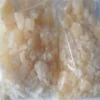
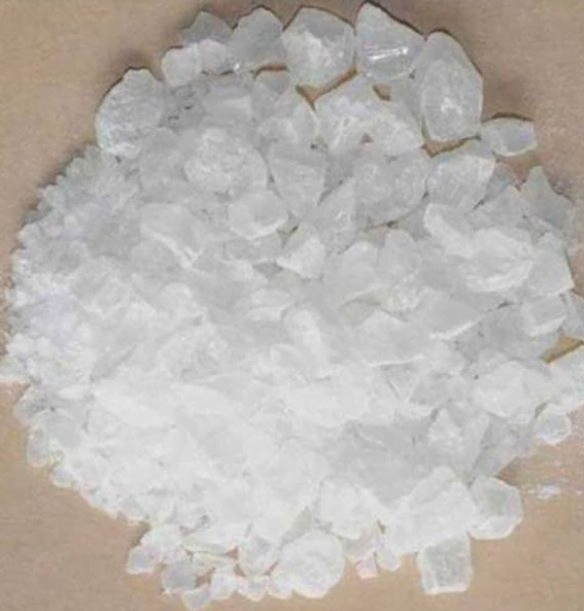
Physical Form: Frequently synthesized as a crystalline salt (e.g., 3Br-PVP Hydrochloride), producing off-white to translucent crystalline structures.
-
Analytical Detection: Identified in forensic laboratories using Gas Chromatography–Mass Spectrometry (GC-MS), Nuclear Magnetic Resonance (NMR) spectroscopy, and High-Performance Liquid Chromatography (HPLC).
Mechanism of Action & Pharmacology
While specific clinical trial data on 3Br-PVP in humans is absent, its mechanism of action can be inferred from its structural class:
-
Triple Monoamine Reuptake Inhibition: Pyrovalerone derivatives typically function as potent inhibitors of the Dopamine Transporter (DAT) and Norepinephrine Transporter (NET), with significantly lower affinity for the Serotonin Transporter (SERT).
-
Lack of Monoamine Release: Unlike amphetamines, which induce neurotransmitter release, pyrrolidinophenone derivatives primarily act as pure, high-potency reuptake inhibitors.
-
Potency Variation: Halogen substitutions (such as fluorine, chlorine, or bromine) on the phenyl ring alter receptor binding affinity and lipophilicity, often modifying the potency and duration of action relative to α-PVP. Buy 3br-pvp crystals online from k2 sheet shop
Toxicity & Health Risks
Substituted cathinones and pyrovalerone analogs carry high risks of severe acute toxicity due to their aggressive stimulant properties.
Acute Physical Effects
-
Cardiovascular Stress: Severe tachycardia (elevated heart rate), hypertension (high blood pressure), vasoconstriction, and potential cardiac arrhythmia.
-
Hyperthermia: Elevated body temperature caused by sustained central nervous system overstimulation.
-
Neurological Toxicity: Seizures, involuntary muscle spasms (dyskinesia), and tremors.
Acute Psychiatric Effects
-
Severe Agitation and Anxiety: Rapid onset of intense panic and extreme restless behavior.
-
Stimulant-Induced Psychosis: Paranoia, auditory and visual hallucinations, severe delirium, and aggression.
-
Dependence & Craving: Pyrrolidine-containing cathinones are noted for producing intense psychological cravings and rapid tolerance development.
Legal & Regulatory Status
The legal status of 3Br-PVP varies globally, but it is broadly restricted under analogue laws:
-
United States: Classified as a Schedule I controlled substance analogue under the Federal Analogue Act (21 U.S.C. § 813) if intended for human consumption, due to its structural and functional similarity to α-PVP and MDPV.
-
United Kingdom: Controlled under the Psychoactive Substances Act 2016, which prohibits the production, supply, and importation of any substance capable of producing a psychoactive effect.
-
International Control: Many European and Asian nations regulate 3Br-PVP under broad-spectrum synthetic cathinone legislation or national controlled substance schedules. Buy 3br-pvp crystals online near me.
Frequently Asked Questions (FAQ)
-
What is 3Br-PVP and what class of compound does it belong to? 3Br-PVP (3-Bromopyrovalerone) is a synthetic stimulant belonging to the substituted cathinone and pyrrolidinophenone chemical families. It is a halogenated derivative of α-PVP (alpha-pyrrolidinopentiophenone), characterized by a bromine atom attached to the phenyl ring.
-
How does 3Br-PVP interact with neurotransmitters in the brain? 3Br-PVP acts primarily as a high-potency reuptake inhibitor for the Dopamine Transporter (DAT) and Norepinephrine Transporter (NET). By blocking the reabsorption of these neurotransmitters, it leads to elevated synaptic concentrations of dopamine and norepinephrine, producing central nervous system stimulation.
-
What is the legal status of 3Br-PVP Crystals? The legal status of 3Br-PVP depends on regional chemical laws. In the United States, it is controlled as a Schedule I controlled substance analogue under the Federal Analogue Act (21 U.S.C. § 813) if intended for human consumption. In the United Kingdom, it falls under the Psychoactive Substances Act 2016, and many other countries ban it under broad synthetic cathinone regulations.
-
What are the acute health risks and side effects associated with 3Br-PVP? Because 3Br-PVP is a potent central nervous system stimulant, exposure carries risks of severe cardiovascular strain (such as tachycardia and high blood pressure), hyperthermia, seizures, intense anxiety, paranoia, and stimulant-induced psychosis.
-
How is 3Br-PVP detected and identified in laboratory testing? In forensic and analytical chemistry settings, 3Br-PVP is identified using structural analysis techniques including Gas Chromatography–Mass Spectrometry (GC-MS), High-Performance Liquid Chromatography (HPLC), and Nuclear Magnetic Resonance (NMR) spectroscopy.
At k2 sheet shop, we bring you the most potent synthetic cannabinoids to help you ease the stress of searching for potent synthetic cannabinoids
| Quantity | 5g, 10g, 25g, 50g, 100g, 250g, 500g, 1kg |
|---|
Related products

Synthetic Cannabinoids
Synthetic Cannabinoids
Synthetic Cannabinoids